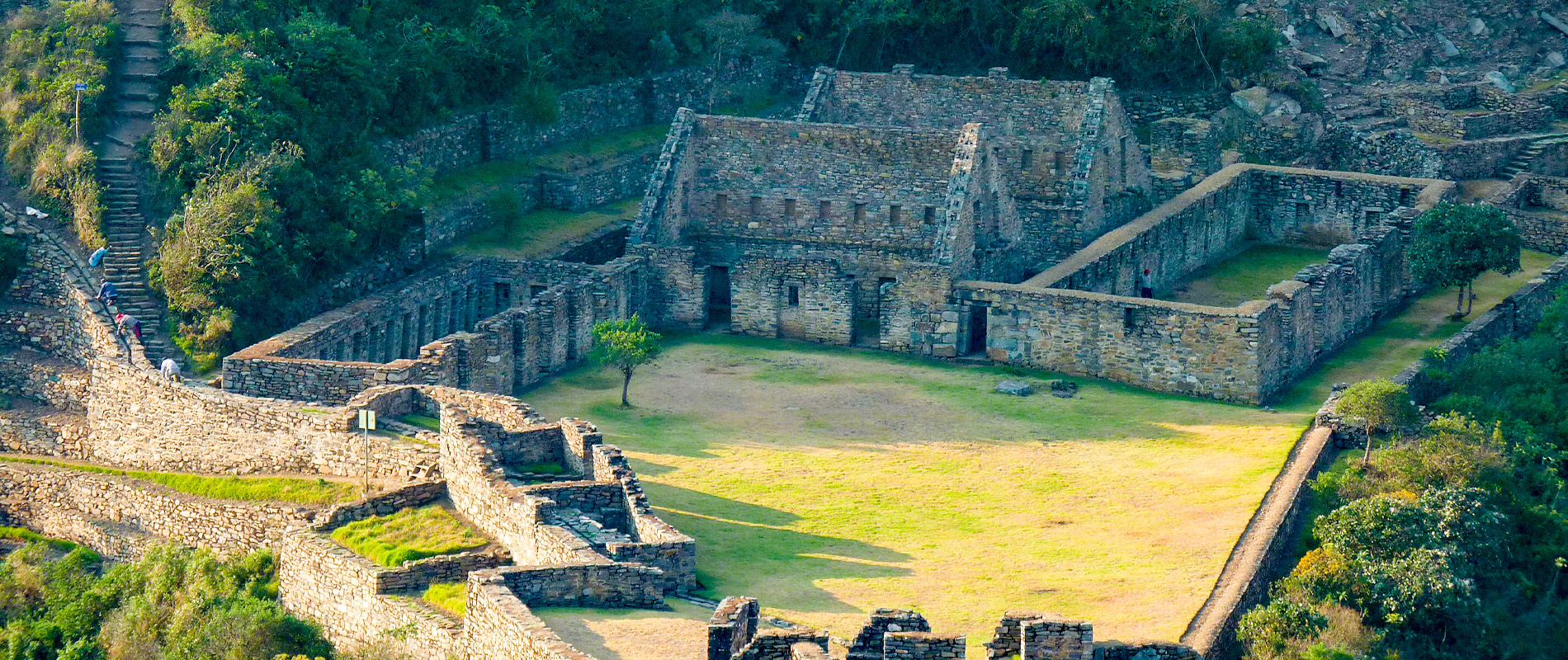
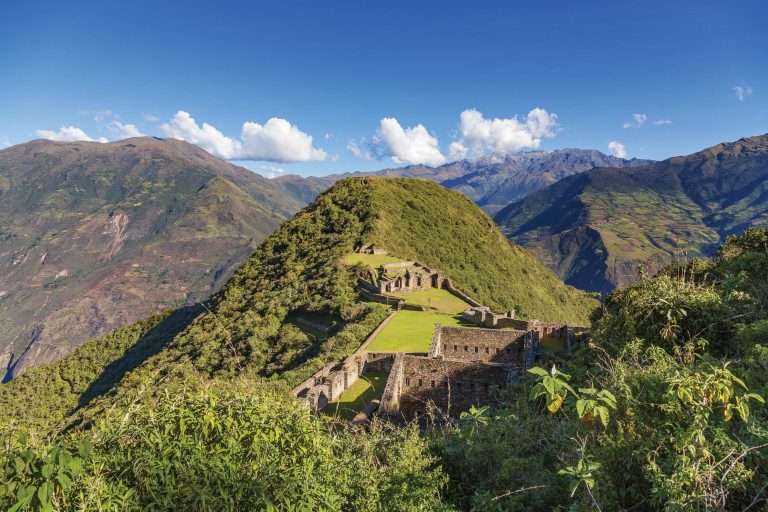
The Choquequirao Trek is a remote hike that takes you to the jewel in the crown of Incan Architecture. Known as the little sister of Machu Picchu, this massive Inca site is three times bigger than its twin, Machu Picchu. Today, much of it is still covered by the dense jungle, which is still being excavated and explored. When you join the few that have tackled this challenging and isolated trek, you become part of the history of the rediscovery of these ruins. Challenge yourself and explore, the end result is the effort.
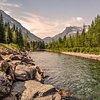
The Choquequirao Trail is not just about the ruins at the end. The true highlight of this trek is the journey, which is simply magical. The trailhead in an isolated village, far far away from any city or town. Immediately follow a narrow path that hugs the mountain sides. The landscape is absolutely stunning and guarantees to delight and amaze. Along the way see contrasts of vibrant green mountains, with snow capped mountains peaking through soft rings of clouds that settle on the summits. This trek gets very little foot traffic because of its remoteness and difficulty. The unique flora and fauna found here flourishes in its undisturbed natural environment. The Apumarac River winds its way through the rolling hills, gushing its waters downstream. Rugged mountains, lush vegetation and crashing waterfalls accompany you along this beguiling trail that takes off the beaten track.
Choquequirao with Orange Nation
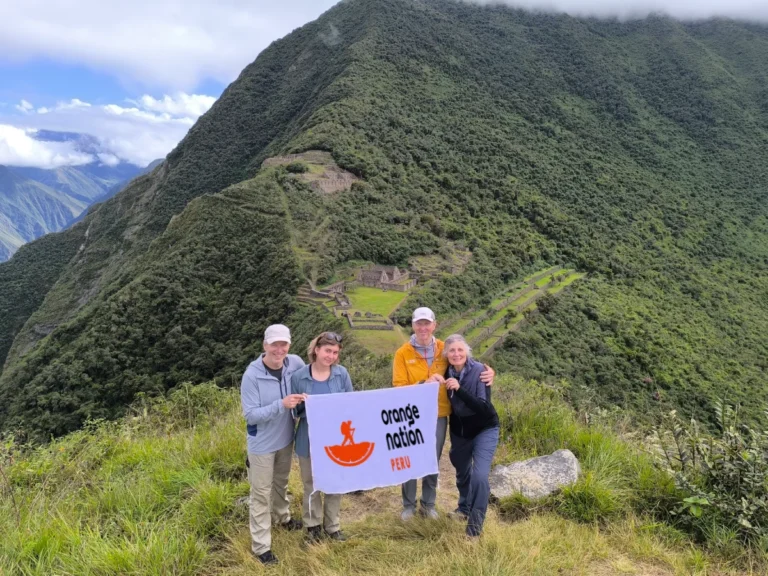
When trekking with Orange Nation, camp under star studded skies in isolated villages. If the season permits, why not pick your own vegetables like corn for dinner. Embrace the outdoors in comfort and style, sleeping in spacious Eureka tents and indulging in elaborate, delicious and abundant meals. This trail has undulating terrain and requires you to be fit and for you to sufficiently acclimatize to the altitude. The consistent up and downs are demanding on the body, especially the knees. All the challenges you have dealt with, are significantly outweighed by the rewards that you are granted. Finally, on day 3, you get to camp close to the archeological site, giving you sufficient time to extensively explore the ruins. Choquequirao is an image of perfectly structured stone, surrounded by eye catching wild vegetation full of color.
Choquequirao Ruins in Detail
A fortress, a ceremonial center, a city or the last residence of the Inca, whatever the purpose, its definitely worth a visit. Choquequirao translates to “Cradle of gold”. The current accepted theory is that there were possibly gold mines here during Inca times, that they exploited. Unfortunately, around the 1900´s the ruins were thoroughly looted. There is a large section of this site that still needs to restored and excavated from the dense jungle, its anyone´s guess what treasures still await to be discovered. During the Spanish conquest, scholars believe that when the Incas started retreating towards the jungle, they used this Inca site as their last refuge.
Like all Inca cities, it includes a main plaza, royal quarters , a temple for the sun, large buildings called kallankas, storage buildings called collcas, platforms called usnu, barracks for soldiers, a prison, walled-off houses separate from the rest of the site for priests, an administrative center and lots and lots of terraces for agriculture and hillside stabilization.
It is divided into the upper half (hanan) and the lower half (hurin). This is only one of the innumerable examples of the Inca concept of duality. In this case, the hanan (upper part) was more important because that’s where the Inca’s residence was. The residence is easily distinguished by the higher quality of stone work and the channeled water that leads straight to a shower and bath.
The most famous part of the ruins are terraces with white quartz llamas built into the terraced walls. We know that they’re llamas, the elevation of the site is too low for alpaca. The elevation of Choquequirao is llama territory.
All that’s left to be Uncovered
Archeologists theorize that the entire hillside to the right of what has been restored is covered with terraces, houses and other Inca constructions. It will take an extraordinary amount of time and money to fund restoration of all of Choquequirao.
A Work in Progress
On your way from Marampata to the ruins, you pass the residences of the Ministry of Culture workers who are still busy clearing jungle and maintaining what has been uncovered. They’re interesting people and if you can catch one taking a bit of a break, take the opportunity to ask them about the ruins and their experiences working there. (Sometimes they have cute puppies to play with).
Elevation on the Trail:
- Trailhead at Capuliyoc: 3033 meters / 9,951 feet above sea level
- Apurimac River at the bridge: 1000 meters / 3,281 feet above sea level
- Matampata: 2918 meters / 9,574 feet above sea level
- Choquequirao ruins: 3,104 meters / 10,184 feet above sea level
How to get to Choquequirao
After arriving from Cusco, the only way to reach the trailhead to these ruins is by bus charter or private vehicle. Trekking is the only way to get to Choquequirao, and it’s no simple task. It is recommended that you hire a guide and a few pack mules to carry extra supplies. It takes approximately 2 days of full hiking to get to the archeological site, and 4 days total to complete the trip. The campsites, like the route itself, are well-maintained and equipped with facilities not found on most other Andean trails. The campsites all have running water, showers and toilet blocks, and even small shops selling snacks and drinks.
Best Time to Go
The best time to do the Choquequirao hike is between May and September. This is the dry season in the Andes, and also when the weather is the most predictable. During the rainy season between October and April often the trail is closed because of unsafe trail conditions and torrential rain.
How many Days should I Hike?
Its 2 days to the ruins and 2 days return on the same route. You have the option of hiking over 4 or 5 days. Descend and then ascend well over 4,300 meters / 14,100 feet. There is no flat terrain on the route, its constant ascents and descents to the ruins and back.
Breakfast is at Capuliyoc and lunch at Chiquiska, both on the side of the river that’s part of the Apurimac region. Once you cross the bridge over the Apurimac River, you enter the Cusco region. This is significant because the Cusco region has a big budget to supporting tourism, while Apurimac does not.
The first day a is hike from Capuliyoc all the way down to the river,and then a hike up to Santa Rosa.
The second day is all uphill to the village of Marampata.
You spend the entire Day 3 exploring Choquequirao. Its important to note that a rest day doesn’t really exist on this trail. From Marampata to Choquequirao is a steep descent, which becomes a steep ascent on the way back.
The fourth day you walk back down to the Apurimac River before crossing the bridge and hiking up towards Chiquiska.
The fifth day is all uphill but not too far. From Chiquiska you walk to Capuliyoc. The view from Capuliyoc is breathtaking.
Packing List for the Chiquequirao Trek
WHAT YOU HAVE TO TAKE WITH YOU
- Original Passport – (it has to be the same you have used for booking your trek)
- Good daypack (30 – 40 L)
- Personal Water: 2-3L reusable bottles (not disposable)
- Comfortable hiking boots with ankle support
- Sleeping bag (can be rented from Orange Nation)
- Headlamp: essential
- Toilet paper
WHAT TO PUT IN YOUR DUFFEL BAG
As a Direct Local Tour operator, we provide you with a duffel bag at your briefing and INCLUDE an extra pack horse which will carry up to 7 kgs or 14 lbs including your 2.5kg sleeping bag, mattress and extra clothing.
- 2 t-shirts
- 2 hiking pants
- 4 sets of undergarments
- 3 sets of hiking socks
- Bathing suit for the thermal waters
- Fleece / Thermals
- Warm clothes
- Waterproof gloves
- Comfortable shoes for camp
- Quickdry towel. We provide small ones, you might prefer something larger
- Small bottle of soap: we provide warm water each day to wash
- Battery charger – No electricity along the trek
- Large plastic bags will be provided at the office — Please ask for them
- Sleeping bag: It has to be at least -15ºC – This can be rented from us
TOILETRIES
- Face moisturizer
- Hand sanitizer
- Wet wipes
- Toothbrush and paste
- Personal medications
- First aid kit: band aids, moleskin, etc
WHAT TO PUT IN YOUR BACKPACK
We highly recommend a small backpack 30 to 40L. The remainder of your belongings will be in your duffel bag waiting at camp.
- Water: Please supply your own water until the first lunch spot, then we will provide you with cold boiled water at every meal time. Please bring your canteens
- Sun hat
- Sunscreen
- Insect repellent
- Headlamp: essential
- Wool hat
- Rain gear
- Fleece
- Snacks like chocolate bars, cereal bars or any dry fruits
- Rain poncho
- Gloves
- Camera
- Hand sanitizer
- Toilet paper and small plastic bag for waste
- Extra money for souvenirs, drinks & tips
Choquequirao Hike information has been updated on July 2027.
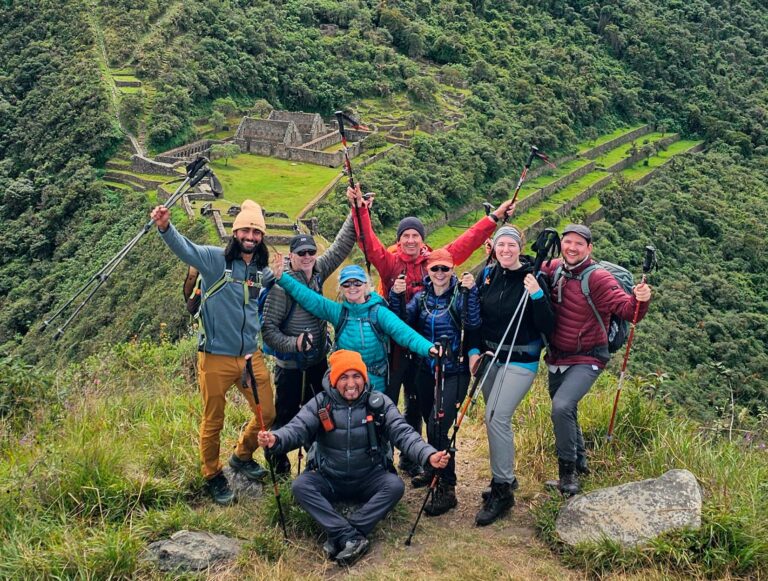 4 days / 3 nights
Choquequirao Trek 4 Days
- Max. altitude: 3150
- Group size: 8
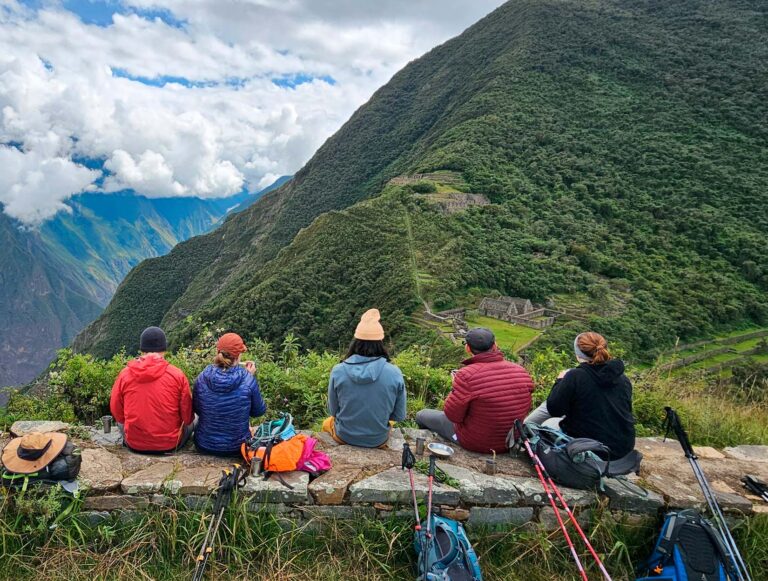 5 days / 4 nights
Choquequirao 5 Day Trek
- Max. altitude: 3100
- Group size: 8
 9 days / 8 nights
Choquequirao Trek to Machu Picchu 9 Days
- Max. altitude: 3,650
- Group size: up to 8 people
 8 days / 7 nights
Choquequirao 8 Day Trek to Machu Picchu
- Max. altitude: 4130
- Group size: 8